
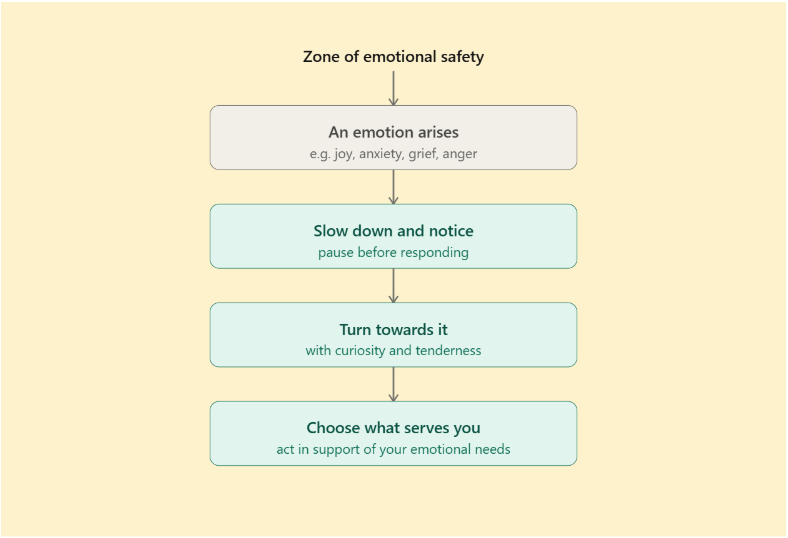
When emotions show up, it is an invitation to understand yourself and your needs more fully. Your ability to observe and describe your emotions from a place of non-judgment will grow your emotional courage over time. This is the first part of your journey through the emotional zone of safety.
Step 1: Pause to consider how you experience emotions
Step 2: Color to observe
Trusting that you are capable of meeting your emotions and staying with them enough to choose next steps is an act of self care. The creative practices below will support you in slowing down and noticing. Try all three and be sure to set aside time to reflect on what each brings up for you.
- Look around you for any materials available such as pens, pencils, paint, or even a phone or tablet application.
- Without thinking, fill a page or screen with colors that match what you are feeling
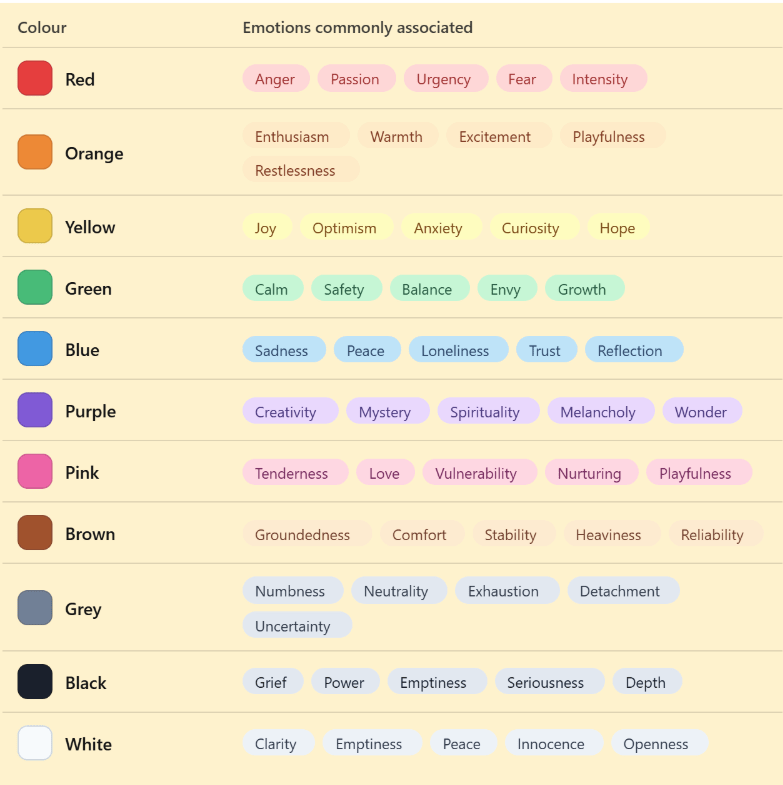
- After a few minutes, spend a few moments observing what you have created. Ask yourself, “What are these colors telling me about what is happening inside of me?”
Tip: If you want to learn more about how colors represent emotions, check out this color guide.
Step 3: Describe with voice
- Open the music application on your phone or device. Find a song that matches closely what you are feeling right now.
- Listen to the song once with your eyes closed. Focus on noticing what you feel as you hear the words, rhythms, melodies, and instruments.
- After a few minutes, spend a few moments describing what you noticed out loud to yourself.
Step 4: Check in mindfully
- Grab a blank page or note on your device. Write or type the words “Right now, I notice…” at the top of the page.
- Complete the sentence as many times as you can in three minutes.
- Take a look at what you’ve written and add a star to the sentences that feel truest to your emotional experience. Consider ways to be more curious and compassionate about what you have discovered.
Explore all of the Create content on safety:
- Create-Safety Article: Who are you when you create?
- Create-Safety Activity 1: Notice Your Emotional Experience
- Create-Safety Activity 2: Turn Towards Your Emotional Experience
- Create-Safety Activity 3: Act in Support of Your Emotional Needs
References
- Haag, A., Bagrodia, R., & Bonanno, G. A. (2024). Emotion regulation flexibility in adolescents: A systematic review from conceptualization to methodology. Clinical Child and Family Psychology Review, 27(3), 697–713. https://doi.org/10.1007/s10567-024-00483-6
- Lynch, J. M., Stange, K. C., Dowrick, C., Getz, L., Meredith, P. J., Van Driel, M. L., Harris, M. G., Tillack, K., & Tapp, C. (2025). The sense of safety theoretical framework: A trauma-informed and healing-oriented approach for whole person care. Frontiers in Psychology, 15, 1441493. https://doi.org/10.3389/fpsyg.2024.1441493
- Jean-Berluche, D. (2024). Creative expression and mental health. Journal of Creativity, 34(2), 1–6. https://doi.org/10.1016/j.yjoc.2024.100083
- Podolan, M., & Gelo, O. C. G. (2024). The role of safety in change-promoting therapeutic relationships: An integrative relational approach. Clinical Neuropsychiatry: Journal of Treatment Evaluation, 21(5), 403–417.